
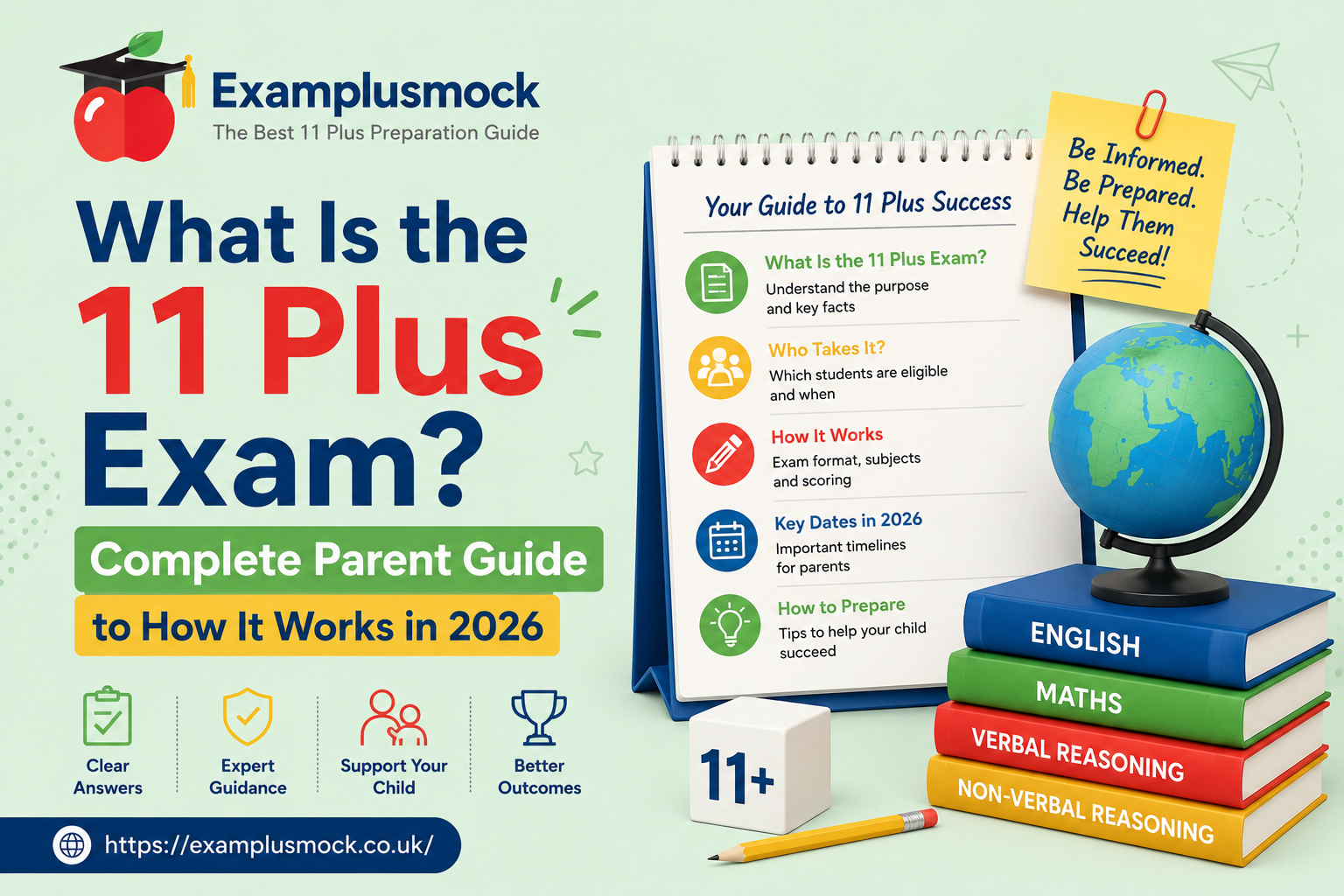
What Is the 11 Plus Exam and How Does It Work?
The 11 Plus Exam is one of the most important entrance assessments for children seeking admission to grammar schools and some selective independent schools in England. Most children take the 11 Plus Exam during Year 6 when they are aged 10 or 11, with the goal of securing a place in Year 7 at a selective secondary school. The exam is designed to identify academic ability and potential rather than simply test what children have learned in school.
Many parents first hear about the 11 Plus Exam when researching grammar schools. The process can initially seem confusing because different areas and schools may use different exam formats, registration procedures, and scoring systems. However, understanding how the exam works makes preparation much easier and helps families make informed decisions.
The good news is that with proper preparation, regular practice, and realistic mock exams, children can approach the 11 Plus Exam with confidence and perform to the best of their ability.
Why Was the 11 Plus Exam Created?
The 11 Plus Exam was created to identify pupils who demonstrate strong academic potential and may benefit from a selective educational environment. Today, grammar schools use the exam as part of their admissions process to select students for Year 7 entry.
Key objectives include:
• Identifying academic potential
• Assessing reasoning ability
• Measuring problem-solving skills
• Evaluating English and Maths performance
• Supporting grammar school admissions
Although the educational system has changed significantly over the years, the 11 Plus Exam remains an important route into many grammar schools across England.
Who Takes the 11 Plus Exam?
Children usually sit the 11 Plus Exam during the autumn term of Year 6, although exact timings vary depending on the region and school. Most pupils taking the exam are between 10 and 11 years old.
The exam is primarily taken by:
• Children applying to grammar schools
• Pupils seeking places at selective schools
• Students aiming for academically selective environments
• Families exploring additional secondary school options
Not every child in England takes the 11 Plus Exam. It is mainly relevant in areas where grammar schools continue to operate.
What Subjects Are Included in the 11 Plus Exam?
Core Areas Assessed
The content of the 11 Plus Exam varies between schools and regions, but most assessments include a combination of the following subjects:
• English
• Mathematics
• Verbal Reasoning
• Non-Verbal Reasoning
Some schools may test all four areas, while others focus on selected subjects.
English
English sections often assess the following:
• Reading comprehension
• Vocabulary
• Grammar
• Language skills
Strong reading habits can significantly improve performance.
Mathematics
Math questions may include the following:
• Arithmetic
• Fractions
• Percentages
• Problem-solving
• Data interpretation
Verbal Reasoning
Verbal reasoning assesses:
• Vocabulary knowledge
• Logical thinking
• Word relationships
• Pattern recognition
Non-Verbal Reasoning
Non-verbal reasoning focuses on:
• Visual patterns
• Shape sequences
• Spatial awareness
• Analytical thinking
Because these reasoning skills are not always heavily covered in school, dedicated preparation is often beneficial.
How Does the 11 Plus Exam Work?
The exact structure of the 11 Plus Exam depends on the school or region.
Generally, children:
• Register for the exam
• Sit one or more assessment papers
• Receive a score
• Use results during school applications
Most exams are completed under timed conditions, meaning children must balance accuracy with speed. Some areas use multiple-choice formats, while others include written responses. Understanding the specific requirements of your target schools is essential before beginning preparation.
When Should Children Start Preparing?
Parents frequently ask when preparation should begin. Many education specialists recommend introducing preparation gradually during Year 4 or early Year 5. Starting early allows children to build skills steadily without feeling overwhelmed.
Benefits of early preparation include:
• Reduced pressure
• Better confidence
• Stronger subject knowledge
• More time for revision
• Improved exam technique
The most successful preparation plans focus on consistency rather than intensive last-minute study.
How Important Are Mock Tests?
Why Mock Exams Matter
Mock exams are among the most effective ways to prepare for the 11 Plus Exam.
Benefits include:
• Familiarity with exam conditions
• Improved time management
• Reduced anxiety
• Better pacing
• Increased confidence
Children who complete realistic mock exams often feel more comfortable when sitting the real test.
For realistic practice, parents can explore: Exam Plus Mock Tests
Parents looking specifically for realistic assessment experiences can also review the following: 11 Plus Mock Tests
Regular mock testing helps children apply their knowledge under realistic exam conditions.
How Parents Can Support Their Child
Parents play a major role in helping children succeed in the 11 Plus Exam.
Helpful approaches include:
• Creating a study routine
• Encouraging daily reading
• Supporting vocabulary development
• Using practice papers
• Monitoring progress
• Celebrating improvements
Children often respond best when preparation is positive and supportive rather than stressful.
Common Mistakes Parents Should Avoid
Many families unintentionally make preparation more difficult.
Common mistakes include:
• Starting too late
• Focusing only on Maths and English
• Ignoring reasoning skills
• Overloading study schedules
• Comparing children with others
• Neglecting mock exam practice
Balanced preparation generally produces better long-term results.
How to Build a Successful Study Plan
Creating an Effective Routine
A successful study plan for the 11 Plus Exam should include the following:
• Daily reading
• Vocabulary practice
• Maths revision
• Reasoning exercises
• Weekly review sessions
• Mock exams
Children benefit most when revision is structured and manageable. A typical weekly schedule might include short sessions across different subjects rather than long periods focused on a single topic.
How Are 11 Plus Exam Scores Calculated?
Understanding Standardised Scores
Many parents are surprised to learn that the 11 Plus Exam is not always scored using simple percentages. Most grammar schools use standardised scoring systems to ensure fairness for children of different ages taking the test.
A standardized score takes into account the following:
• The child’s raw score
• Their age at the time of the exam
• The overall performance of other candidates
• The specific scoring system used by the exam provider
This means that two children with the same raw score may receive slightly different standardized scores depending on their age. Younger children are often given a small adjustment to ensure fairness. Because every school and region may use different scoring methods, parents should carefully review admissions information provided by their preferred schools. Understanding how scores are calculated helps families set realistic expectations and track progress more effectively during preparation.
Differences Between GL Assessment and CEM Exams
Understanding the Two Main Exam Providers
Many grammar schools use either GL Assessment or CEM-style tests as part of the 11 Plus Exam process. Although both assess academic ability, there are differences in format and question styles.
GL assessment exams often include the following:
• English
• Mathematics
• Verbal Reasoning
• Non-Verbal Reasoning
• Multiple-choice questions
CEM exams may focus more heavily on:
• Vocabulary
• Comprehension
• Numerical reasoning
• Problem-solving skills
• Speed and accuracy
Understanding which exam provider is used by your target school can help parents choose the most appropriate preparation materials. Children benefit when their revision reflects the style of questions they are likely to encounter during the actual examination.
Grammar Schools and the 11 Plus Exam
How Grammar School Admissions Work
The primary purpose of the 11 Plus Exam is to help grammar schools select students for admission. Grammar schools are state-funded secondary schools that choose pupils based on academic ability rather than catchment area alone.
Benefits often associated with grammar schools include:
• Strong academic environments
• High achievement levels
• Wide range of extracurricular opportunities
• University preparation support
• Competitive learning culture
Parents should remember that every grammar school has its own admissions criteria. Passing the 11 Plus Exam does not always guarantee a place, particularly if demand exceeds available spaces.
Researching individual school requirements is therefore an important part of the preparation process.
Year-by-Year 11 Plus Preparation Timeline
Year 4 Preparation
Year 4 is an excellent time to begin developing the core skills needed for the 11 Plus Exam. Preparation at this stage should focus on building strong reading habits, expanding vocabulary, and improving mathematical confidence.
Children can benefit from:
• Daily reading
• Vocabulary-building activities
• Mental maths practice
• Educational games
• Basic reasoning exercises
Year 5 Preparation
Year 5 is often when structured preparation begins. At this stage, children should become familiar with exam formats and question types.
Recommended activities include:
• Practice papers
• Comprehension exercises
• Verbal reasoning practice
• Non-verbal reasoning practice
• Timed activities
Year 6 Preparation
During Year 6, preparation should focus on revision, exam technique, and confidence building.
Children should:
• Complete mock exams
• Review mistakes regularly
• Strengthen weak areas
• Improve time management
• Develop exam-day strategies
A gradual approach allows children to build confidence without feeling overwhelmed.
How Online Mock Tests Help Children Prepare
Building Confidence Through Realistic Practice
Online mock tests have become increasingly popular because they allow children to experience realistic exam conditions from the comfort of home. They provide valuable opportunities to apply skills under timed conditions and monitor progress over time.
Benefits include:
• Instant performance feedback
• Improved time management
• Better familiarity with exam formats
• Identification of weak areas
• Increased confidence
Parents looking for realistic preparation support can explore resources available through the following: https://examplusmock.co.uk/
For dedicated mock exam preparation, visit: https://examplusmock.co.uk/11-plus-mock-tests/
Families seeking personalised support can also contact the team through: https://examplusmock.co.uk/contact-us/
Regular mock testing helps children become more comfortable with exam pressure and improves readiness for the actual assessment.
Common Myths About the 11 Plus Exam
Separating Fact from Fiction
Many misconceptions surround the 11 Plus Exam, which can sometimes create unnecessary worry for parents and children.
Common myths include:
• Only exceptionally gifted children can pass
• Tutors are essential for success
• More revision always produces better results
• Mock exams are not necessary
• Starting late does not matter
In reality, success usually comes from consistent preparation, effective study habits, and strong support from parents and teachers. Every child develops at a different pace, and there is no single formula that guarantees success. Understanding the facts helps families approach preparation with greater confidence and realistic expectations.
Why Vocabulary Matters
Vocabulary is one of the most important factors influencing performance in the 11 Plus Exam.
Children with strong vocabulary skills often:
• Understand questions more easily
• Perform better in comprehension
• Succeed in verbal reasoning
• Read more confidently
Parents can improve vocabulary through regular reading, discussion, and word-learning activities.
The Role of Reading in 11 Plus Success
Reading supports multiple areas of the 11 Plus Exam.
Benefits include:
• Better comprehension skills
• Improved vocabulary
• Stronger grammar awareness
• Increased concentration
• Enhanced critical thinking
Daily reading remains one of the most effective preparation strategies available.
Managing Exam Stress
Many children feel nervous about the 11 Plus Exam.
Parents can help by:
• Maintaining realistic expectations
• Encouraging effort over perfection
• Practicing relaxation techniques
• Using mock exams to build familiarity
• Keeping preparation balanced
Confidence often grows naturally when children feel prepared.
Additional Resources for Parents
Helpful educational resources include:
• 11 Plus Mock Tests Information
• Contact Exam Plus Mock Tests
These resources can support preparation and provide valuable guidance throughout the process.
Frequently Asked Questions
What is the 11 Plus Exam?
The 11 Plus Exam is a selective entrance assessment used by many grammar schools and some independent schools to determine admission into Year 7. It is typically taken by children aged 10 or 11 during Year 6 and assesses academic skills such as English, Mathematics, Verbal Reasoning, and Non-Verbal Reasoning.
Is the 11 Plus Exam difficult?
The difficulty of the 11 Plus Exam depends on a child’s preparation and familiarity with the tested subjects. Many children find reasoning sections challenging because they are not always covered extensively in primary school. Consistent practice and mock exams can significantly improve performance.
When should preparation begin?
Many families begin preparation during Year 4 or Year 5. Starting early allows children to develop skills gradually and reduces the pressure associated with last-minute revision.
Are mock exams necessary?
Mock exams are highly beneficial because they replicate real exam conditions, improve confidence, strengthen time management skills, and help identify weaknesses before the actual examination.
Can parents help without hiring a tutor?
Yes. Parents can support preparation through daily reading, vocabulary practice, structured revision, and regular mock exam practice. Consistency and encouragement often have a significant positive impact on performance.
Conclusion
The 11 Plus Exam is an important step for families considering grammar school education. Understanding how the exam works, what subjects are included, and how children are assessed allows parents to create a more effective preparation plan. By combining structured revision, regular reading, vocabulary development, and realistic mock exams, children can approach the 11 Plus Exam with confidence and maximize their chances of success. A positive and balanced approach not only improves exam performance but also helps children develop valuable academic skills that will benefit them long after the examination is complete.