
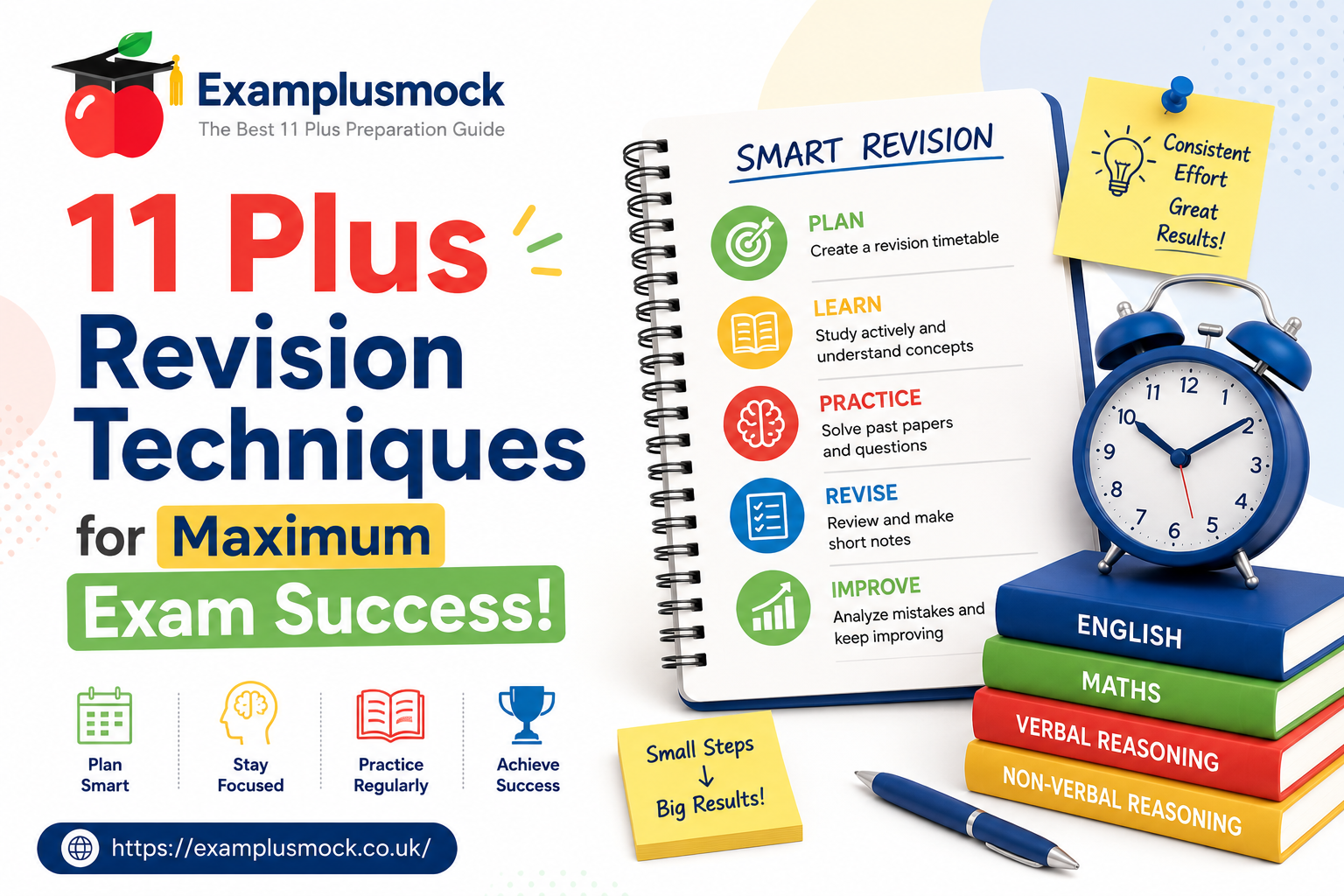
11 Plus Revision Techniques for Maximum Exam Success
Why 11 Plus Revision Techniques Matter
Preparing for grammar school entrance exams requires more than simply working through practice papers. The most successful students use effective 11 Plus Revision Techniques to strengthen their understanding, improve confidence, and identify areas that need further improvement. A structured revision strategy helps children learn more efficiently and reduces the stress often associated with exam preparation.
Many parents focus heavily on the amount of revision their child completes. However, quality is usually more important than quantity. Children who use the right 11 Plus Revision Techniques often make faster progress because they revise actively rather than passively. They understand concepts more deeply, retain information for longer, and perform more confidently during mock exams and the final assessment.
Good revision habits also encourage independence. As children become familiar with effective learning methods, they develop skills that benefit them throughout their academic journey.
Understanding the Purpose of Revision
Why Revision Is Important
• Strengthens existing knowledge
• Improves memory retention
• Identifies weak areas
• Builds exam confidence
• Develops problem-solving skills
• Reduces exam anxiety
Revision is not simply about reading notes repeatedly. Effective 11 Plus Revision Techniques encourage children to engage with information, test themselves regularly, and apply what they have learned. When revision is structured properly, children feel more prepared and less overwhelmed. This leads to better performance and a more positive attitude towards studying.
Creating a Structured Revision Plan
A revision plan provides direction and helps children stay organized. Without a clear plan, students may spend too much time on topics they already understand while neglecting weaker areas.
Elements of a Good Revision Plan
• Clear weekly goals
• Balanced subject coverage
• Regular review sessions
• Scheduled mock exams
• Time for breaks and relaxation
An organised study plan is one of the most effective 11 Plus Revision Techniques because it helps children cover all subjects in a balanced and structured way. Rather than focusing only on favourite topics, students can allocate time to both strengths and weaker areas. Parents should review the revision plan regularly, monitor progress, and make adjustments when necessary. Flexibility is essential because every child learns at a different pace. A well-managed plan keeps revision focused, reduces stress, and supports steady improvement throughout preparation.
Active Revision vs Passive Revision
Many children make the mistake of reading notes repeatedly without actively engaging with the material.
Passive Revision Examples
• Re-reading textbooks
• Highlighting large sections
• Looking at notes without testing understanding
Active Revision Examples
• Answering questions
• Teaching concepts to others
• Creating summaries
• Completing practice exercises
• Using flashcards
Active learning is one of the most effective 11 Plus Revision Techniques because it encourages children to engage with information rather than simply read it. Activities such as practice questions, flashcards, and self-testing improve understanding, strengthen memory retention, and boost exam confidence.
Using Practice Papers Effectively
Practice papers are a key component of successful exam preparation.
Benefits of Practice Papers
• Familiarity with question formats
• Improved confidence
• Better time management
• Identification of weak areas
• Opportunity to apply knowledge
Children should not simply complete practice papers and move on. Reviewing mistakes is equally important. Parents can encourage children to analyze errors, understand why mistakes occurred, and identify strategies for improvement. This approach transforms practice papers into one of the most effective 11 Plus Revision Techniques available.
The Importance of Mock Exams
Mock exams provide realistic exam experience and help children become comfortable with timed conditions.
Parents can support preparation through:
Benefits of Mock Exams
• Builds exam confidence
• Improves pacing
• Identifies strengths and weaknesses
• Reduces exam anxiety
• Encourages realistic preparation
Regular mock exams help children apply 11 Plus Revision Techniques under realistic exam conditions. They improve time management, build confidence, identify weaknesses, and reduce exam anxiety. This practical experience helps students become familiar with the exam format and perform more effectively on test day.
Strengthening Vocabulary Through Revision
Vocabulary development should be an essential part of every revision plan. A strong vocabulary improves reading comprehension, verbal reasoning, and overall communication skills. Regular word practice helps children understand exam questions more accurately and increases confidence when tackling unfamiliar texts during 11+ preparation.
Effective Vocabulary Activities
• Keeping a vocabulary notebook
• Learning words in context
• Reviewing synonyms and antonyms
• Reading regularly
• Using new words in writing
Strong vocabulary supports comprehension, verbal reasoning, and written communication. It is an important part of successful 11 Plus Revision Techniques. Children with a broader vocabulary often feel more confident when tackling unfamiliar passages and reasoning questions.
Improving Reading Comprehension Skills
Reading comprehension is a major component of many grammar school entrance exams.
Ways to Improve Comprehension
• Daily reading
• Discussing passages
• Identifying key ideas
• Practicing inference questions
• Reviewing unfamiliar vocabulary
Children who include comprehension work within their 11 Plus Revision Techniques often achieve better results across multiple exam sections.
Revising Mathematics Effectively
Mathematics requires consistent practice and regular review.
Maths Revision Strategies
• Practice calculations daily
• Review mistakes carefully
• Focus on weak topics
• Use timed exercises
• Complete mixed-question papers
A structured approach helps children improve accuracy and speed while building confidence.
Developing Verbal Reasoning Skills
Verbal reasoning assesses language understanding, logic, and vocabulary.
Useful Verbal Reasoning Activities
• Vocabulary practice
• Synonym and antonym exercises
• Word relationship questions
• Pattern recognition tasks
• Timed reasoning exercises
Strong verbal reasoning skills are often developed through consistent use of 11 Plus Revision Techniques over an extended period.
Improving Non-Verbal Reasoning Performance
Non-verbal reasoning requires visual thinking and pattern recognition.
Helpful Strategies
• Practice shape patterns
• Learn common question types
• Develop visual analysis skills
• Complete timed exercises
• Review incorrect answers
Children improve more quickly when non-verbal reasoning becomes a regular part of their revision routine.
Using Flashcards for Revision
Flashcards are simple but highly effective.
Flashcard Benefits
• Quick review sessions
• Active recall practice
• Portable learning tool
• Improved memory retention
• Easy progress tracking
Flashcards work particularly well for vocabulary, formulas, and key concepts.
The Importance of Regular Review
Many children forget information if they do not revisit it regularly.
Effective Review Strategies
• Weekly revision sessions
• Monthly topic reviews
• Practice quizzes
• Revision summaries
• Mock exam analysis
Regular review is one of the most important 11 Plus Revision Techniques because it strengthens long-term memory.
How Parents Can Support Revision
Parents play a significant role in helping children stay motivated and organized.
Ways Parents Can Help
• Create a study routine
• Encourage consistency
• Monitor progress
• Celebrate improvements
• Provide emotional support
Positive encouragement often leads to better results than excessive pressure.
Common Revision Mistakes to Avoid
Many children work hard but use ineffective strategies.
Common Mistakes
• Revising without a plan
• Ignoring weak subjects
• Cramming before exams
• Focusing only on scores
• Skipping mock exams
Avoiding these mistakes makes 11 Plus Revision Techniques far more effective.
Balancing Revision and Relaxation
Successful preparation requires balance.
Healthy Habits
• Regular exercise
• Adequate sleep
• Healthy eating
• Family time
• Relaxation activities
Children who maintain healthy routines often concentrate better and retain information more effectively.
Additional Learning Resources
Parents can support revision with trusted educational resources.
Useful resources include:
https://www.bbc.co.uk/bitesize
https://www.gov.uk/schools-admissions
Combining these resources with effective 11 Plus Revision Techniques can significantly improve preparation quality.
Frequently Asked Questions
How early should children start using 11 Plus Revision Techniques?
Most children benefit from beginning structured revision during Year 4 or early Year 5. Starting early allows skills to develop gradually and reduces pressure closer to the exam. Effective 11 Plus Revision Techniques focus on consistency rather than intensive study sessions. Early preparation also provides more time to identify weaknesses, strengthen knowledge, and build confidence before the final examination.
How many hours should children revise each week?
The ideal amount depends on age, ability, and preparation stage. Many children benefit from four to seven hours of focused revision each week during the early stages. As the exam approaches, this may increase slightly. Quality is more important than quantity, and effective 11 Plus Revision Techniques focus on productive learning rather than long study sessions.
Are mock exams necessary?
Yes. Mock exams help children experience realistic exam conditions and apply their knowledge under pressure. They improve time management, confidence, and exam technique. Mock exams also reveal strengths and weaknesses, allowing parents and tutors to adjust revision plans accordingly.
What is the most effective revision method?
Active learning is generally the most effective approach. Activities such as practice questions, teaching concepts, flashcards, and self-testing help children retain information more effectively than passive reading. Combining several 11 Plus Revision Techniques usually produces the best results.
Can parents help without being experts?
Absolutely. Parents do not need specialist knowledge to support revision. Encouraging consistency, providing structure, monitoring progress, and maintaining a positive learning environment can make a significant difference. Supportive guidance often improves motivation and confidence throughout preparation.
Conclusion
Effective 11 Plus Revision Techniques can transform exam preparation by helping children learn more efficiently, build confidence, and improve performance across all subjects. A structured approach that combines active learning, practice papers, mock exams, regular review, and parental support creates a strong foundation for success.
By applying proven 11 Plus Revision Techniques consistently, children can strengthen their knowledge, improve exam skills, and approach grammar school entrance exams with greater confidence. These habits not only support 11+ success but also develop valuable learning skills that benefit children throughout their education.