
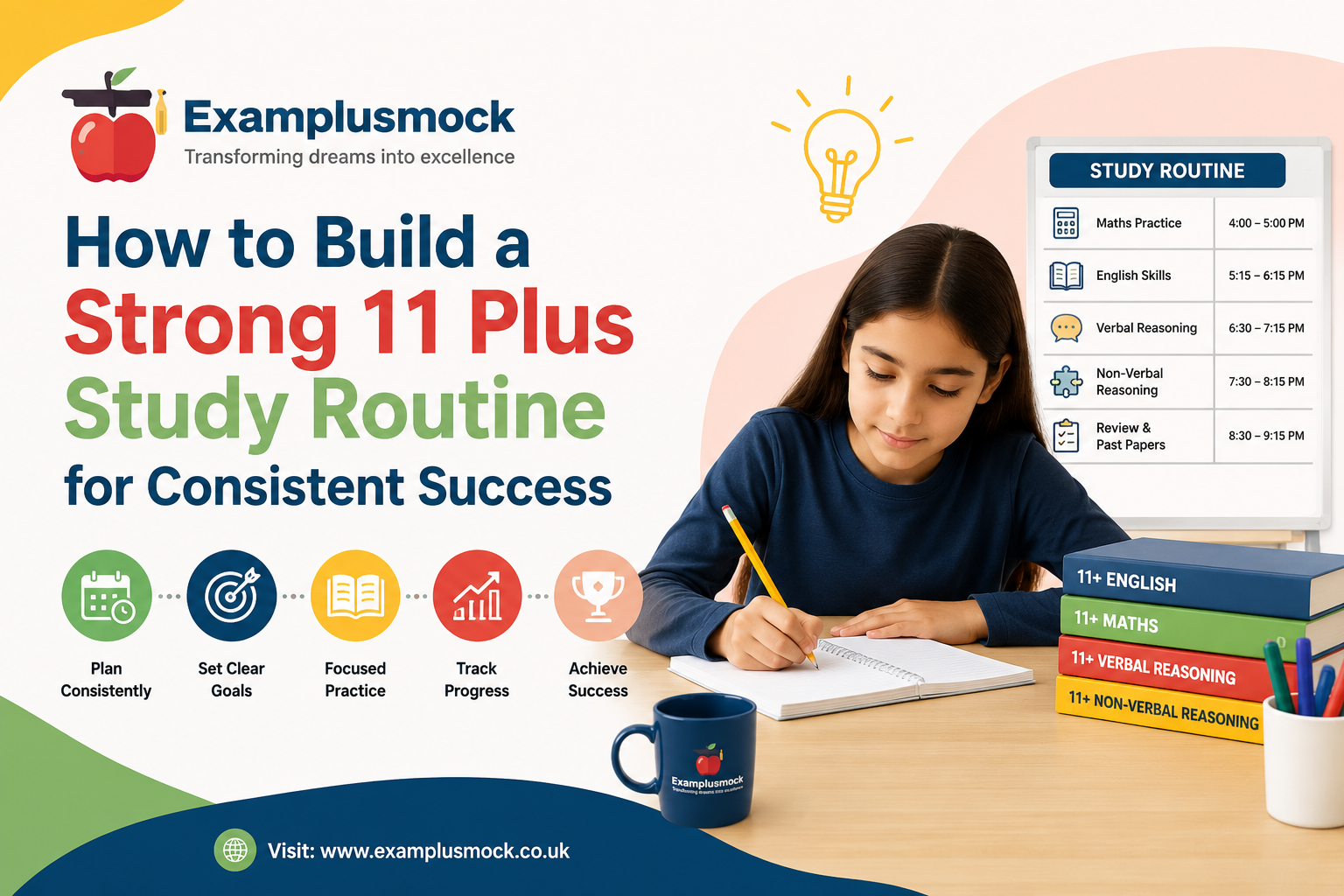
How to Build a Strong 11 Plus Study Routine for Consistent Success
Why a Strong 11 Plus Study Routine Matters
A strong 11 Plus study routine is one of the most important foundations for success in grammar school entrance exams. Many children begin their preparation with enthusiasm, but without a structured plan, their progress often becomes inconsistent. This is where a well-designed routine becomes essential.
Parents who establish a clear and balanced 11 Plus study routine help their children stay organized, focused, and confident throughout the preparation journey. Instead of studying randomly or only before tests, children learn how to study in a planned and consistent way.
A strong 11 Plus study routine ensures that all key subjects—Math, English, Verbal Reasoning, and Non-Verbal Reasoning—are covered regularly. It also reduces last-minute pressure and improves long-term memory retention.
Most importantly, a structured 11 Plus study routine helps children develop discipline, which is a critical skill not only for exams but also for future academic success.
Understanding What Makes an Effective 11 Plus Study Routine
Before building an effective 11 Plus study routine, parents must understand what makes a routine successful. It is not about long hours of studying but about consistency, balance, and smart planning.
An effective 11-plus study routine should include the following:
- Regular short study sessions
- Balanced subject coverage
- Time for revision
- Mock exam practice
- Breaks and relaxation
- Weekly progress tracking
When these elements are combined properly, the 11 Plus study routine becomes powerful and sustainable.
Key Subjects to Include in a 11 Plus Study Routine
A complete 11 Plus study routine must cover all exam areas. Each subject plays an important role in overall performance.
English
English focuses on comprehension, grammar, vocabulary, and spelling. A strong 11 Plus study routine should include daily reading and comprehension practice.
Math
Math includes problem-solving, arithmetic, fractions, and reasoning. Regular practice is essential in any 11 Plus study routine.
Verbal Reasoning
This section tests logic, vocabulary, and pattern recognition. It should be practiced several times a week in an 11 Plus study routine.
Non-Verbal Reasoning
This includes shapes, patterns, and visual logic. A strong 11 Plus study routine must include visual reasoning practice.
How to Create a Daily 11 Plus Study Routine
A daily structure is the heart of a successful 11 Plus study routine. Without daily consistency, progress becomes slow and uneven.
A sample daily 11-plus study routine can include the following:
- 30 minutes English practice
- 30 minutes Maths practice
- 20 minutes Verbal Reasoning
- 20 minutes Non-Verbal Reasoning
- 10–15 minutes revision
This structure keeps the 11 Plus study routine balanced without overwhelming the child.
Weekly Planning for a 11 Plus Study Routine
A weekly structure adds depth to an 11 Plus study routine. It ensures that all topics are covered properly over time.
A good weekly 11-plus study routine includes the following:
- 5 days of structured learning
- 1 mock test or practice exam
- 1 revision or light study day
This balance prevents burnout and strengthens learning.
Importance of Consistency in 11 Plus Study Routine
Consistency is more important than intensity in an 11 Plus study routine. Studying a little every day is far more effective than studying for long hours once a week.
When children follow a consistent 11-plus study routine, they:
- Retain information better
- Improve gradually
- Build confidence
- Reduce exam stress
Consistency is the key factor that determines success in any 11 Plus study routine.
Role of Mock Exams in 11 Plus Study Routine
Mock exams are one of the most important parts of a 11 Plus study routine. They help children experience real exam conditions and improve performance under pressure.
Mock exams help
- Improve time management
- Identify weak areas
- Build exam confidence
- Track progress
Parents can use:
https://examplusmock.co.uk/
Regular mock exams strengthen the 11-plus study routine by making preparation more realistic and structured.
How to Balance Study and Breaks in 11 Plus Study Routine
A good 11 Plus study routine should always include breaks. Without breaks, children can become tired, distracted, and stressed.
Parents should ensure:
- Short breaks after every study session
- Time for play and hobbies
- Relaxation activities
A balanced 11 Plus study routine improves focus and motivation.
Using Time Management in 11 Plus Study Routine
Time management is a critical part of any 11 Plus study routine. Children must learn how to complete questions within time limits.
Parents can help by:
- Using timers during practice
- Setting time limits for each subject
- Encouraging quick thinking
Good time management improves the effectiveness of the 11 Plus study routine.
Improving Weak Areas Through 11 Plus Study Routine
Every child has weak areas. A smart 11 Plus study routine focuses on improving those weaknesses.
Parents should:
- Identify weak topics early
- Spend extra time on difficult areas
- Use targeted practice exercises
A focused 11 Plus study routine ensures balanced improvement.
Importance of Revision in 11+ Study Routine
Revision is essential in any 11+ study routine. Without revision, children may forget what they have learned.
Effective revision includes:
- Weekly recap sessions
- Practice tests
- Flashcards and notes
Regular revision strengthens the 11+ study routine.
How Parents Can Support 11+ Study Routine
Parental support plays a major role in a successful 11+ study routine. Children perform better when they feel supported.
Parents should:
- Monitor progress
- Encourage consistency
- Provide motivation
- Avoid pressure
A supportive environment improves the 11+ study routine.
Common Mistakes in 11+ Study Routine
Many parents make mistakes when creating an 11+ study routine, such as the following:
- Overloading study hours
- Ignoring breaks
- Focusing only on scores
- Lack of structure
Avoiding these mistakes makes the 11+ study routine more effective.
Using Online Resources in 11+ Study Routine
Online resources make an 11+ study routine more engaging and effective.
Parents can use:
- Online practice tests
- Learning videos
- Interactive quizzes
For additional learning support:
https://www.bbc.co.uk/bitesize
These tools enhance the quality of the 11+ study routine.
Building Confidence Through 11+ Study Routine
A strong 11+ study routine builds confidence over time. As children improve, they feel more capable and less anxious.
Confidence grows when:
- Scores improve gradually
- Mistakes reduce over time
- Practice becomes easier
Confidence is a natural outcome of a strong 11+ study routine.
Tracking Progress in 11+ Study Routine
Tracking progress is important in an 11+ study routine. It helps parents understand improvement levels.
Parents should track:
- Mock exam scores
- Speed and accuracy
- Weak subjects
This makes the 11+ study routine more goal-oriented.
Emotional Balance in 11+ Study Routine
Emotional well-being is often ignored but very important in an 11+ study routine.
Parents should ensure:
- No excessive pressure
- Positive reinforcement
- Healthy communication
A calm mind improves the effectiveness of the 11+ study routine.
Long-Term Benefits of a Strong 11+ Study Routine
A strong 11+ study routine offers benefits beyond exams:
- Better discipline
- Improved focus
- Strong academic habits
- Increased confidence
These benefits last long after the 11+ exam is over.
When Should You Start a 11+ Study Routine
The ideal time to start a 11+ study routine is
- Year 4 for foundation building
- Year 5 for intensive preparation
Starting early ensures steady progress in the 11+ study routine.
Frequently Asked Questions (FAQs)
1. What is the best way to create an 11+ study routine?
The best way to create an 11+ study routine is to keep it simple, consistent, and balanced. Parents should divide study time across all subjects like math, English, verbal reasoning, and non-verbal reasoning. Short study sessions of 30–45 minutes are more effective than long hours. A good routine also includes revision days and weekly mock tests. It is important not to overload the child, as burnout can reduce performance. A structured 11+ study routine should focus on steady progress rather than perfection. Tracking improvement weekly also helps adjust the routine based on strengths and weaknesses.
2. How many hours should a child study in an 11+ study routine?
On average, children should study 1.5 to 2.5 hours per day as part of a balanced 11+ study routine. However, this depends on the child’s age, school workload, and preparation stage. Year 4 students may need less time, while Year 5 students may require more structured study sessions. The key is consistency, not excessive hours. A well-planned 11+ study routine should include breaks and relaxation time to avoid stress. Studying in short, focused sessions improves concentration and retention. Parents should also ensure that study time is productive, not just long hours without focus.
3. Why is consistency important in an 11+ study routine?
Consistency is important because it helps children build long-term memory and a strong understanding of concepts. A consistent 11+ study routine ensures that children revise topics regularly and do not forget important skills. Irregular study leads to gaps in knowledge, which can affect exam performance. When children follow a daily routine, they become more confident and less anxious during exams. Consistency also helps develop discipline and focus, which are essential for academic success. Even small daily practice sessions are more powerful than occasional long study hours. Over time, consistency leads to steady improvement.
4. How do mock exams help in an 11+ study routine?
Mock exams play a crucial role in an 11+ study routine because they simulate real exam conditions. They help children understand time pressure, question difficulty, and exam format. Mock tests also highlight weak areas that need improvement. By regularly practicing mock exams, children become more confident and less nervous. Parents can track progress and adjust study plans accordingly. Mock exams also improve speed, accuracy, and decision-making skills. Platforms like https://examplusmock.co.uk/ provide structured practice tests that help children prepare effectively. Overall, mock exams are one of the most powerful tools in a successful study routine.
5. What mistakes should parents avoid in an 11+ study routine?
Parents should avoid several common mistakes when planning an 11+ study routine. The biggest mistake is overloading children with too much study, which can cause stress and burnout. Another mistake is focusing only on exam scores instead of understanding mistakes. Ignoring breaks and relaxation time can also reduce concentration. Comparing children with others is harmful and affects confidence. A good 11+ study routine should focus on balance, encouragement, and steady progress. Parents should also avoid changing routines too frequently. Instead, they should adjust based on performance and keep the routine stable and supportive.
Final Tips for Parents
To make the 11+ study routine successful:
- Keep it consistent
- Stay flexible when needed
- Focus on progress, not perfection
- Support emotional well-being
A balanced approach ensures long-term success.
Conclusion
A strong 11+ study routine is the foundation of successful grammar school preparation. With consistent practice, structured planning, mock exams, and parental support, children can develop confidence and improve steadily. A well-balanced 11+ study routine not only boosts academic performance but also builds discipline, focus, and emotional strength, helping children succeed in the 11+ exam and beyond.