
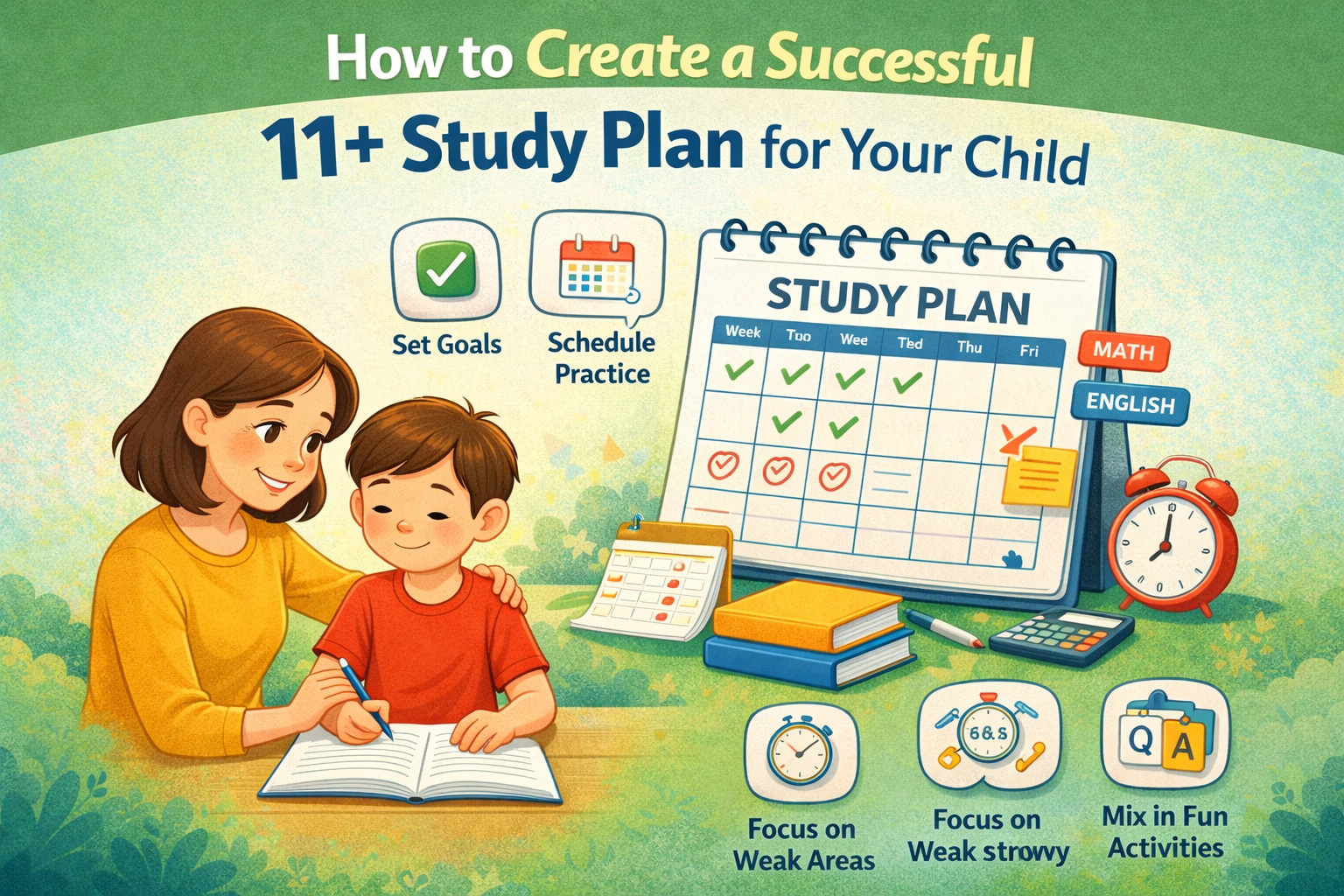
How to Create a Successful 11+ Study Plan for Your Child
Why a Study Plan Is Crucial for 11+ Success
A structured study plan helps children:
-
Organise study time effectively
-
Focus on weaker areas while maintaining strengths
-
Balance school homework with exam preparation
-
Reduce stress and increase confidence
Assessing Your Child’s Current Level
Before creating a plan, parents should:
-
Evaluate performance in past school tests and practice papers
-
Identify strong and weak subjects
-
Observe study habits and attention span
-
Note areas where your child may need additional support
Setting Realistic Goals and Targets
A good 11+ study plan is built around achievable goals:
-
Break topics into small, manageable sections
-
Set weekly and monthly targets
-
Include both learning and revision sessions
-
Track progress and adjust goals as needed
Allocating Time for Key Subjects
Parents should ensure balanced coverage of essential areas:
-
Maths: Problem-solving, reasoning, and mental arithmetic
-
English: Comprehension, grammar, and vocabulary
-
Verbal Reasoning: Word patterns, synonyms, and codes
-
Non-Verbal Reasoning: Shapes, sequences, and logical patterns
Incorporating Mock Exams and Practice Tests
Regular mock exams allow children to:
-
Experience exam conditions and timing
-
Identify areas for improvement
-
Build confidence and familiarity with question formats
-
Measure progress over time
Tips for Parents to Keep Children Motivated
-
Encourage breaks and relaxation to avoid burnout
-
Praise effort and progress rather than just results
-
Use short, engaging study sessions to maintain focus
-
Include interactive resources, quizzes, and online tuition if needed
Conclusion
A well-structured study plan ensures that children cover all necessary subjects, focus on weaker areas, and approach the 11+ exam with confidence and readiness.