
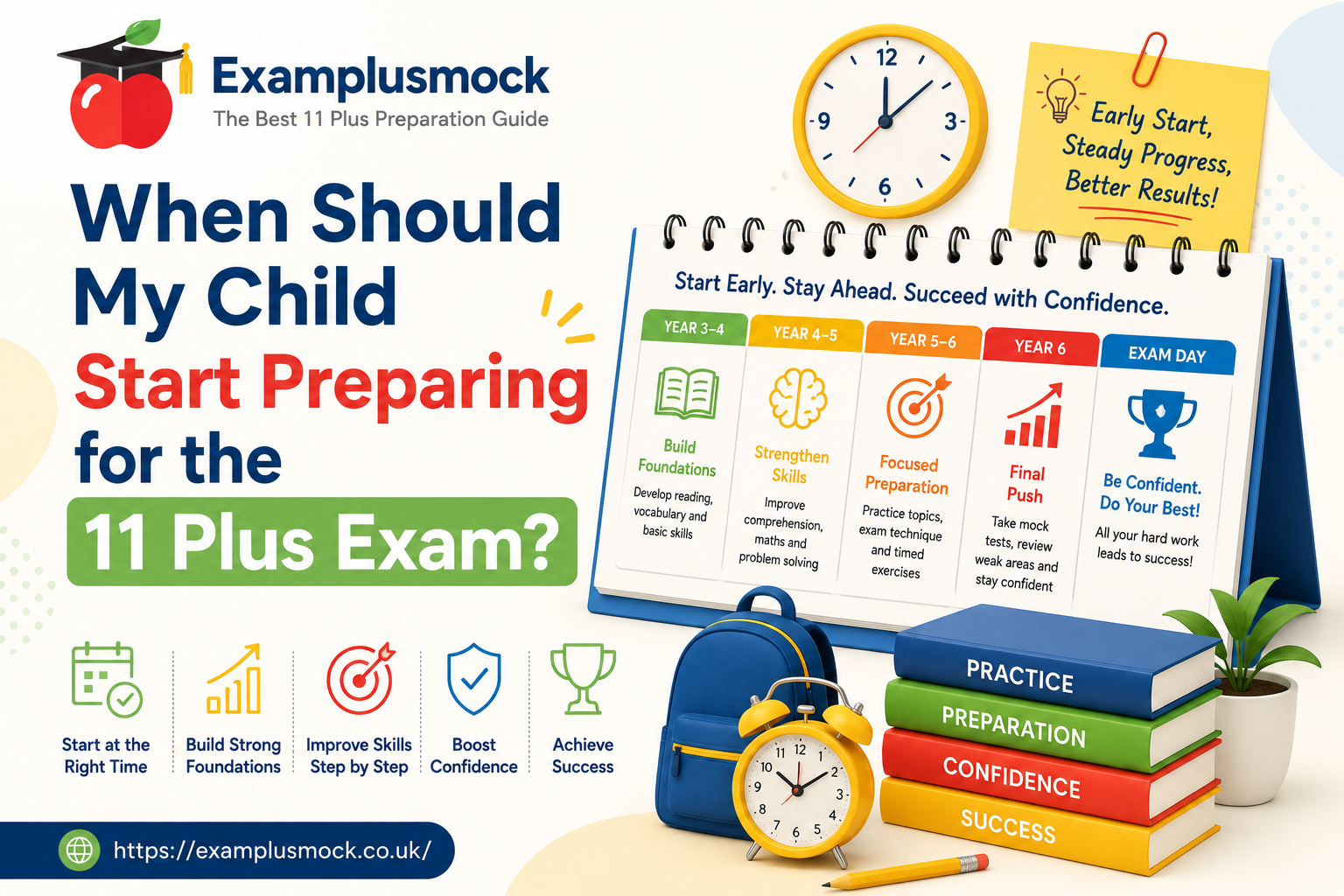
When Should My Child Start Preparing for the 11 Plus Exam?
Many parents ask the same question when considering grammar school applications: When should my child start preparing for the 11 Plus Exam? The answer depends on several factors, including your child’s current academic ability, confidence, learning pace, and the specific schools you are targeting. However, most education specialists agree that starting 11 Plus Preparation early provides children with the best opportunity to develop skills gradually and confidently.
A structured approach to 11 Plus Preparation helps children avoid unnecessary stress and gives them enough time to strengthen weak areas. Rather than rushing through large amounts of work shortly before the exam, children can build strong foundations in English, Maths, Verbal Reasoning, and Non-Verbal Reasoning over an extended period. Parents who begin planning early often find that their children feel more relaxed, confident, and prepared when exam day arrives.
Why Early 11 Plus Preparation Matters
Starting 11 Plus Preparation early allows children to develop essential skills gradually. The exam assesses more than school knowledge; it also tests reasoning, problem-solving, vocabulary, comprehension, and time management.
Benefits of early preparation include:
• Reduced exam pressure
• Improved confidence
• Better subject understanding
• More time to address weaknesses
• Stronger revision habits
Children who begin preparing earlier usually have more opportunities to practice, review mistakes, and become familiar with exam-style questions.
What Is the Ideal Age to Start 11 Plus Preparation?
There is no single age that works for every child. However, most families begin 11 Plus Preparation during Year 4 or early Year 5.
Starting in Year 4
Year 4 is often the ideal time to begin building core skills without creating pressure.
Activities might include:
• Daily reading
• Vocabulary development
• Mental maths practice
• Basic reasoning exercises
• Educational games
Preparation at this stage should feel enjoyable rather than intensive.
Starting in Year 5
Many families begin structured 11 Plus Preparation in Year 5. At this stage, children can start working with practice papers and become familiar with question types.
Year 5 preparation often includes:
• English comprehension
• Mathematics revision
• Verbal reasoning practice
• Non-verbal reasoning exercises
• Timed activities
This gradual increase in preparation helps children build confidence while developing exam techniques.
What Happens If Preparation Starts Late?
Some families only discover grammar school options during Year 5 or even Year 6. While earlier preparation is usually beneficial, late starters can still succeed with a focused and organized approach.
Parents should prioritize:
• Identifying strengths and weaknesses
• Creating a realistic study plan
• Completing regular practice papers
• Using mock exams
• Monitoring progress closely
Consistency becomes especially important when preparation time is limited.
Understanding the Different Areas Tested
A successful 11 Plus Preparation plan should cover all major subjects assessed in the exam.
English
English sections often include:
• Reading comprehension
• Vocabulary
• Grammar
• Language skills
Mathematics
Maths questions may assess:
• Arithmetic
• Fractions
• Percentages
• Problem-solving
• Data interpretation
Verbal Reasoning
Verbal reasoning focuses on:
• Vocabulary
• Word relationships
• Logical thinking
• Pattern recognition
Non-Verbal Reasoning
Non-verbal reasoning assesses:
• Visual patterns
• Shape relationships
• Spatial awareness
• Analytical thinking
Balanced preparation ensures that children do not neglect any important areas.
Creating a Year-by-Year Preparation Timeline
Year 4 Focus
During Year 4, the goal should be skill development.
Parents can encourage:
• Reading every day
• Vocabulary games
• Mental maths practice
• Educational puzzles
• Independent learning habits
Year 5 Focus
Year 5 often marks the beginning of structured 11 Plus Preparation.
Children should begin:
• Practice papers
• Timed exercises
• Comprehension work
• Reasoning questions
• Progress tracking
Year 6 Focus
Year 6 preparation should focus on:
• Mock exams
• Revision
• Time management
• Exam techniques
• Confidence building
The final months should reinforce existing knowledge rather than introduce entirely new concepts.
How to Know If Your Child Is Ready for 11 Plus Preparation
Many parents worry about whether their child is ready to begin structured 11 Plus Preparation. While every child develops differently, there are several signs that indicate readiness for grammar school preparation.
Children may be ready if they:
• Enjoy reading independently
• Show curiosity about learning
• Complete schoolwork confidently
• Demonstrate good concentration
• Enjoy problem-solving activities
• Respond positively to challenges
Academic readiness does not mean perfection. Many children improve significantly during preparation. The goal is to identify whether your child can engage with learning consistently and positively. Parents should avoid comparing their child with others. Every child develops at a different pace, and successful 11 Plus Preparation should be tailored to individual needs and strengths.
The Benefits of Starting Early Without Pressure
One of the biggest advantages of early 11 Plus Preparation is that children can develop skills gradually rather than rushing through large amounts of material.
Benefits include:
• Less stress
• Better confidence
• Improved knowledge retention
• Stronger understanding of concepts
• More opportunities for revision
Children who start early often enjoy the process more because preparation feels like part of their normal learning routine rather than an intense short-term challenge. Parents should focus on consistency rather than perfection. Even small amounts of regular practice can produce excellent long-term results.
How Mock Exams Improve Preparation
Mock exams are one of the most valuable tools in 11 Plus Preparation.
Benefits include:
• Familiarity with exam conditions
• Improved time management
• Reduced anxiety
• Better pacing
• Greater confidence
Parents can access realistic mock exam opportunities through the following:
For dedicated mock exam practice:
https://examplusmock.co.uk/11-plus-mock-tests/
Regular mock testing helps children understand how the real exam feels and highlights areas requiring additional attention.
Signs Your Child Is Ready for More Advanced Preparation
Parents often wonder whether their child is ready to move beyond basic study activities.
Positive indicators include the following:
• Strong reading habits
• Consistent concentration
• Good problem-solving skills
• Confidence with schoolwork
• Willingness to learn independently
When these signs are present, children are often ready for more structured 11 Plus Preparation activities.
How Much Study Time Is Appropriate?
One common mistake is assuming that more study always leads to better results.
A balanced approach is usually most effective.
Recommended Study Time
Year 4:
• 1–2 hours per week
Year 5:
• 3–5 hours per week
Year 6:
• 5–7 hours per week
Quality is generally more important than quantity. Short, focused sessions often produce better outcomes than long study periods.
Creating a Weekly 11 Plus Preparation Schedule
Many parents struggle to decide how much revision their child should complete each week. A balanced 11 Plus Preparation schedule helps children make steady progress while maintaining healthy routines.
Example schedule:
Monday
• 30 minutes reading
• 20 minutes vocabulary
Tuesday
• 40 minutes Maths
• 20 minutes reasoning practice
Wednesday
• Reading comprehension activity
Thursday
• Maths problem-solving
Friday
• Vocabulary review
Weekend
• Practice paper
• Mock exam practice
• Mistake review session
A structured routine provides consistency and reduces last-minute panic.
How Reading Supports 11 Plus Preparation
Reading is one of the most powerful activities children can undertake during 11 Plus Preparation.
Benefits include:
• Improved vocabulary
• Better comprehension
• Stronger grammar awareness
• Enhanced concentration
• Increased general knowledge
Children should read a variety of materials including fiction, non-fiction, newspapers, biographies, and educational articles. Daily reading supports success across multiple sections of the 11 Plus Exam and should remain a key part of every preparation plan.
Why Vocabulary Development Is So Important
Vocabulary is a major factor in grammar school entrance exams.
Children with strong vocabulary skills often:
• Understand questions faster
• Perform better in comprehension
• Achieve higher verbal reasoning scores
• Feel more confident during exams
Parents can support vocabulary development through:
• Reading
• Flashcards
• Word games
• Vocabulary notebooks
• Daily discussion
Vocabulary building should be viewed as a long-term process rather than a last-minute revision activity.
How Parents Can Support 11 Plus Preparation
Parents play a vital role throughout the preparation process.
Helpful strategies include:
• Creating a study routine
• Encouraging regular reading
• Tracking progress
• Providing positive feedback
• Celebrating small achievements
• Avoiding excessive pressure
Supportive guidance often improves confidence and motivation.
Creating a Positive Learning Environment
The home environment plays a significant role in successful 11 Plus Preparation.
Parents can create a positive atmosphere by:
• Providing a quiet study space
• Maintaining consistent routines
• Encouraging questions
• Celebrating progress
• Avoiding unnecessary pressure
Children learn most effectively when they feel supported and valued rather than judged solely on their performance. A positive environment often improves motivation, confidence, and long-term engagement with learning.
Managing Exam Stress During Preparation
Even well-prepared children may feel nervous about the 11 Plus Exam.
Parents can help reduce stress by:
• Encouraging healthy routines
• Promoting realistic expectations
• Using mock exams to build familiarity
• Focusing on effort rather than perfection
• Maintaining open communication
Children who feel emotionally supported are often better able to manage pressure and perform at their best.
The Role of Mock Exams in Building Confidence
Mock exams are not simply assessment tools. They are confidence-building exercises that allow children to practise under realistic conditions.
Benefits include:
• Improved timing skills
• Reduced anxiety
• Better concentration
• Increased familiarity with exam formats
• Stronger exam technique
Parents can explore realistic mock exam opportunities at:
Dedicated mock test information is available at:
https://examplusmock.co.uk/11-plus-mock-tests/
For additional support, families can contact:
https://examplusmock.co.uk/contact-us/
Regular mock testing helps children approach the real exam with greater confidence and readiness.
Common Mistakes Parents Should Avoid
Many families unintentionally make preparation more difficult.
Common mistakes include:
• Starting revision too late
• Focusing only on Maths and English
• Ignoring reasoning skills
• Overloading study schedules
• Comparing children with others
• Neglecting mock exams
Avoiding these mistakes creates a healthier and more productive learning experience.
Additional Learning Resources
Useful resources include:
• https://examplusmock.co.uk/11-plus-mock-tests/
• https://examplusmock.co.uk/contact-us/
• https://www.bbc.co.uk/bitesize
These resources can support structured 11 Plus Preparation and help parents guide their children effectively.
Common Myths About 11 Plus Preparation
Many misconceptions can cause confusion for parents beginning the 11 Plus Preparation journey.
Myth 1: Only exceptionally gifted children pass
Reality: Consistent preparation, effort, and confidence often play a larger role than natural ability alone.
Myth 2: Tutors are essential
Reality: Many children succeed using quality resources, parental support, and regular practice.
Myth 3: More revision always means better results
Reality: Quality and consistency are more effective than excessive study hours.
Myth 4: Mock exams are unnecessary
Reality: Mock exams are one of the most valuable preparation tools available.
Myth 5: Starting late does not matter
Reality: Earlier preparation generally provides more opportunities for skill development and confidence building.
Understanding these myths helps families approach 11 Plus Preparation more effectively.
Frequently Asked Questions
What is the best age to start 11 Plus Preparation?
Most experts recommend beginning light preparation during Year 4 and introducing more structured study during Year 5. This provides children with enough time to build skills gradually without feeling overwhelmed.
Can my child start preparing in Year 5?
Yes. Many children begin structured 11 Plus Preparation in Year 5 and achieve excellent results. Consistent study, regular practice, and effective revision are usually more important than starting extremely early.
Is tutoring necessary?
No. Many children succeed through independent study and parental support. Tutors can provide additional guidance, but consistent preparation, quality resources, and mock exams are often sufficient for many families.
How important are mock exams?
Mock exams are extremely valuable because they recreate real exam conditions. They help children develop confidence, improve time management, and identify strengths and weaknesses before the actual exam.
What should parents focus on most?
Parents should focus on building confidence, encouraging consistency, supporting reading and vocabulary development, and maintaining a positive learning environment throughout the preparation journey.
Conclusion
The best time to begin 11 Plus Preparation is usually during Year 4 or early Year 5, allowing children to develop skills gradually and confidently. Starting early reduces pressure, improves subject knowledge, and creates opportunities to build strong exam habits. By combining structured revision, regular reading, vocabulary development, and realistic mock exams, parents can help their children approach the 11 Plus Exam with confidence and maximise their chances of success.