
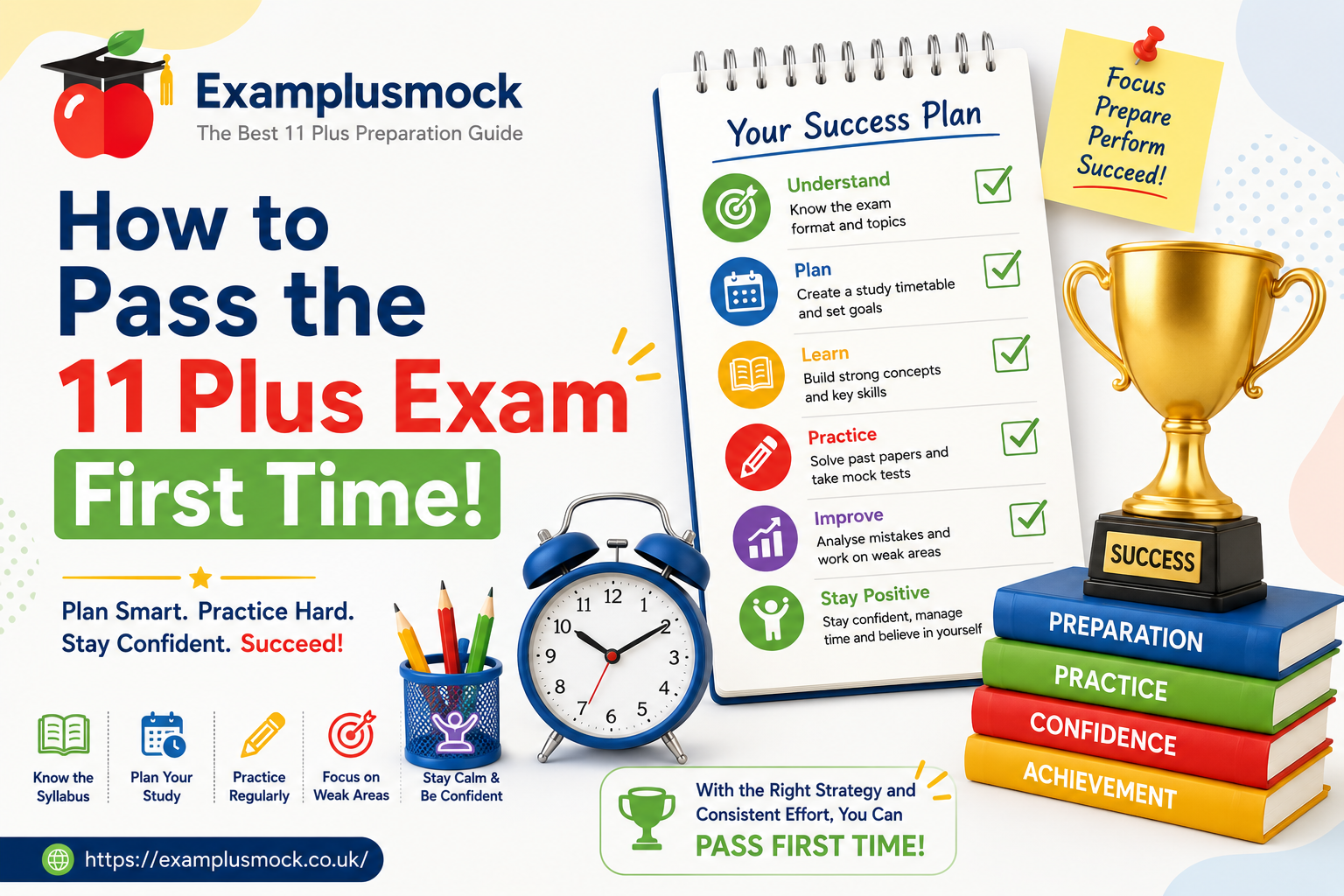
How to Pass 11 Plus Exam First Time
Every year, thousands of families ask the same question: how can a child successfully pass the grammar school entrance examination on their first attempt? While there is no guaranteed formula for success, children who follow a structured preparation plan are far more likely to achieve strong results. To pass 11 Plus Exam papers successfully, children need consistent revision, regular practice, effective time management, and confidence in every subject.
The 11+ examination is designed to identify children with strong academic potential rather than simply testing what they have learned at primary school. It challenges pupils to apply knowledge, think logically, solve unfamiliar problems, and work efficiently under timed conditions. Because of this, preparation should begin well before the exam date and focus on developing a wide range of skills.
Many parents assume that passing the examination depends entirely on natural ability. In reality, most successful candidates achieve excellent results because they prepare consistently over several months. Understanding how to pass 11 Plus Exam papers through balanced revision and regular mock testing can make the preparation journey less stressful and far more productive.
Why Pass 11 Plus Exam Requires More Than Intelligence
Many children are academically capable but still struggle during the examination because they lack familiarity with the question styles or experience working under time pressure. The ability to pass 11 Plus Exam assessments depends on preparation just as much as natural talent.
Successful candidates usually develop:
-
Strong reading habits.
-
Broad vocabulary.
-
Excellent mathematical understanding.
-
Logical reasoning skills.
-
Effective time management.
-
Confidence under exam conditions.
Children who revise regularly often outperform those who rely only on classroom learning. Preparation also teaches valuable study habits that continue to benefit children throughout secondary school and beyond.
Understand the 11 Plus Exam Format Before You Begin
Before creating a revision timetable, parents should understand the structure of the examination used by their chosen grammar schools, as this is an essential first step to pass 11 Plus Exam papers with confidence.
Most schools assess combinations of the following:
-
English
-
Mathematics
-
Verbal Reasoning
-
Non-Verbal Reasoning
Some schools include all four subjects, while others assess only English and Maths. Understanding the exam format helps families plan revision more effectively and ensures children develop every skill needed to pass 11 Plus Exam papers confidently.
Parents should also check:
-
Question formats
-
Time limits
-
Number of papers
-
Marking methods
-
School-specific requirements
Knowing what to expect removes uncertainty and helps children feel more prepared.
Create a Realistic Revision Plan
One of the biggest mistakes families make is revising without a clear plan. A structured timetable allows children to cover every subject while maintaining a healthy balance between study and relaxation, giving them a better chance to pass 11 Plus Exam papers confidently.
An effective revision schedule should include:
-
English practice.
-
Mathematics revision.
-
Verbal Reasoning.
-
Non-Verbal Reasoning.
-
Vocabulary development.
-
Reading practice.
-
Mock exams.
Example weekly timetable:
-
Monday – English comprehension
-
Tuesday – Mathematics
-
Wednesday – Verbal Reasoning
-
Thursday – Non-Verbal Reasoning
-
Friday – Vocabulary review
-
Saturday – Practice paper
-
Sunday – Revision and mistake analysis
Short daily study sessions are usually more effective than occasional long revision periods. A consistent timetable helps children gradually build the skills needed to pass 11 Plus Exam assessments without becoming overwhelmed.
Master Every Subject
Children cannot rely on being strong in only one subject. Grammar schools assess multiple academic abilities, so balanced preparation is essential for children who want to pass 11 Plus Exam successfully on their first attempt.
English Preparation
English plays an important role because it influences comprehension, vocabulary, grammar, and reasoning.
Parents should encourage:
-
Daily reading.
-
Comprehension exercises.
-
Vocabulary building.
-
Grammar practice.
-
Discussion about books.
Strong reading habits improve confidence across several areas of the examination.
Mathematics Preparation
Mathematics questions often require both calculation and logical thinking.
Children should practice:
-
Mental arithmetic.
-
Fractions.
-
Percentages.
-
Decimals.
-
Ratios.
-
Word problems.
-
Multi-step calculations.
Accuracy and speed improve through regular practice rather than memorization.
Verbal Reasoning Preparation
Verbal Reasoning measures language and logical thinking rather than curriculum knowledge.
Common question types include:
-
Synonyms.
-
Antonyms.
-
Letter sequences.
-
Codes.
-
Analogies.
-
Word relationships.
Building vocabulary every day is one of the most effective ways to improve verbal reasoning performance.
Non-Verbal Reasoning Preparation
Many children find Non-Verbal Reasoning unfamiliar because it uses visual patterns rather than written language.
Question types often include:
-
Shape sequences.
-
Rotations.
-
Reflections.
-
Mirror images.
-
Pattern recognition.
-
Spatial reasoning.
Regular exposure helps children recognize common question styles more quickly. Balanced preparation across every subject gives children the greatest opportunity to pass 11 Plus Exam papers successfully.
Improve Vocabulary Every Day
Vocabulary appears throughout the examination, particularly in English and verbal reasoning.
Children with stronger vocabularies often:
-
Read more quickly.
-
Understand questions more accurately.
-
Interpret passages better.
-
Solve reasoning questions faster.
-
Feel more confident.
Simple daily activities include:
-
Learning five new words.
-
Reading newspapers.
-
Playing word games.
-
Keeping a vocabulary notebook.
-
Using new words in conversation.
Vocabulary develops gradually, so daily practice produces the best long-term results. Parents should encourage children to understand meanings rather than simply memorise definitions.
Read Regularly to Improve Comprehension
Reading is one of the most valuable habits for children preparing to pass 11 Plus exam papers.
Daily reading strengthens the following:
-
Reading comprehension.
-
Vocabulary.
-
Grammar.
-
Concentration.
-
General knowledge.
-
Critical thinking.
Children should read a variety of materials, including the following:
-
Fiction books.
-
Non-fiction books.
-
Newspapers.
-
Educational magazines.
-
Science articles.
-
Historical stories.
After reading, parents can ask questions such as the following:
-
What was the main idea?
-
Why did the character behave that way?
-
What might happen next?
-
Which new words did you discover?
These discussions develop deeper comprehension skills that are valuable during the examination.
Practice with Timed Papers
Many children know the answers but fail to complete every question because they spend too long on difficult sections.
Timed practice teaches children how to:
-
Manage time effectively.
-
Work under pressure.
-
Prioritise easier questions.
-
Maintain concentration.
-
Improve pacing.
Parents can begin with shorter timed activities before moving to complete practice papers.
Examples include:
-
Ten-minute vocabulary quizzes.
-
Fifteen-minute math drills.
-
Timed comprehension passages.
-
Mini reasoning tests.
As confidence grows, children can complete full examination papers under realistic time limits. Developing speed while maintaining accuracy is one of the most important steps to pass 11 Plus Exam papers successfully.
Take Regular Mock Exams
Mock exams are among the most effective preparation tools available because they recreate the pressure, timing, and structure of the real examination, helping children build the confidence and skills needed to pass 11 Plus Exam successfully.
Unlike ordinary practice papers, mock exams help children experience:
-
Strict time limits.
-
Formal exam conditions.
-
Concentration over longer periods.
-
Managing pressure.
-
Building confidence.
-
Applying revision effectively.
Regular mock exams also allow parents to identify strengths and weaknesses across every subject. Reviewing results carefully makes future revision far more targeted and productive.
Benefits of mock exams include:
-
Improved exam confidence.
-
Better time management.
-
Familiarity with question styles.
-
Reduced anxiety.
-
Greater accuracy.
-
Stronger decision-making under pressure.
Parents looking for realistic grammar school preparation can explore professional mock examinations and guidance through the following:
Dedicated information about mock tests is available at:
https://examplusmock.co.uk/11-plus-mock-tests/
Families who have questions about preparation or booking mock examinations can also contact:
https://examplusmock.co.uk/contact-us/
Regular mock testing allows children to monitor progress, adapt revision plans, and become comfortable with real examination conditions. As children gain experience, they often approach the actual exam with greater confidence and are much better prepared to pass 11 Plus Exam papers on their first attempt.
Learn from Every Mistake
One of the most effective ways to pass 11 Plus Exam papers is to treat every mistake as a learning opportunity. Many children complete practice papers and immediately move on to the next one without reviewing their answers. This approach limits progress because the same mistakes are likely to be repeated. Instead of focusing only on scores, children should understand why an answer was incorrect and how they can solve similar questions correctly in the future.
After each practice paper or mock exam, encourage your child to ask the following:
-
Why did I get this question wrong?
-
Did I misunderstand the question?
-
Was I rushing because of time pressure?
-
Do I need to revise this topic again?
-
How can I avoid making the same mistake next time?
Keeping a notebook of common errors is an excellent revision tool. Reviewing these notes every week helps reinforce learning and gradually reduces repeated mistakes. Parents should also praise improvement rather than expecting perfection. Every corrected mistake brings a child one step closer to achieving their goal to pass 11 Plus Exam papers confidently.
Develop Strong Time Management Skills
Time management is one of the biggest challenges in the 11+ examination. Many children know the correct answers but fail to finish the paper because they spend too much time on difficult questions, making it harder to pass 11 Plus Exam successfully.
Strong time management allows children to:
-
Complete more questions.
-
Improve overall accuracy.
-
Stay calm throughout the exam.
-
Avoid rushing during the final minutes.
-
Build confidence under timed conditions.
Parents can help by introducing timed practice several times each week. Children should become comfortable completing questions within realistic time limits before attempting full-length papers.
Useful strategies include:
-
Answer easy questions first.
-
Skip difficult questions and return later.
-
Keep an eye on the clock without becoming distracted.
-
Avoid spending too long on one problem.
-
Leave a few minutes to review completed answers if possible.
These habits develop gradually through consistent practice. Children who regularly complete timed papers often feel much more confident on the actual exam day.
How Parents Can Help Children Pass the 11 Plus Exam
Parents play a vital role throughout the preparation journey. A calm and supportive home environment encourages children to stay motivated and enjoy learning, giving them the confidence to pass 11 Plus Exam successfully.
Children preparing to pass 11 Plus exam papers benefit most when parents:
-
Create a realistic study timetable.
-
Encourage daily reading.
-
Provide regular practice opportunities.
-
Celebrate small improvements.
-
Maintain positive communication.
-
Avoid comparing results with other children.
Parents should remember that every child learns at a different pace. Some topics may require extra practice, while others will improve quickly. Flexibility and encouragement help children remain confident throughout the preparation process. Supporting emotional well-being is equally important. Children who feel relaxed and supported usually perform better than those who feel excessive pressure.
Common Mistakes That Prevent Success
Even hardworking children sometimes develop study habits that reduce their chances of success. Recognizing these mistakes early can improve preparation significantly.
Common mistakes include:
-
Leaving revision until the last few weeks.
-
Revising only favorite subjects.
-
Ignoring weaker areas.
-
Completing practice papers without reviewing mistakes.
-
Avoiding mock exams.
-
Studying for long periods without taking breaks.
-
Comparing progress with other children.
Parents should also avoid creating unrealistic expectations. Consistent improvement is far more valuable than expecting perfect scores in every practice session. Children who follow a balanced revision plan are generally better prepared to pass 11 Plus Exam papers with confidence.
Healthy Habits Before Exam Day
Academic preparation is essential, but physical and emotional well-being also influence exam performance. Children should develop healthy routines throughout their preparation, not only during the final week before the exam.
Important habits include:
-
Getting enough sleep every night.
-
Eating balanced meals.
-
Drinking plenty of water.
-
Taking regular exercise.
-
Limiting unnecessary screen time before bedtime.
-
Scheduling regular breaks during revision.
The evening before the examination should be calm and relaxed. Instead of attempting large amounts of last-minute revision, children should review key notes briefly, prepare everything they need for the next day, and get an early night’s sleep. These simple habits help children feel refreshed, focused, and ready to pass 11 Plus Exam papers successfully.
Additional Learning Resources
Using a variety of trusted learning resources helps children strengthen knowledge across every subject while keeping revision interesting. Parents can combine study books with online resources, mock examinations, and educational activities to create a balanced preparation program.
Useful resources include:
These resources provide valuable guidance, practice materials, revision support, and realistic mock exams that help children build confidence before sitting the grammar school entrance examination. Combining structured revision, high-quality learning materials, and regular mock exams gives children the best opportunity to pass 11 Plus Exam papers while developing skills that will continue to benefit them throughout their education.
Frequently Asked Questions
Can my child pass the 11 Plus Exam without a tutor?
Yes, many children successfully pass 11 Plus Exam papers without private tutoring. Success depends more on consistent preparation than on attending tuition. Parents can support learning by creating a structured revision timetable, encouraging daily reading, practicing vocabulary, and using quality practice papers and mock exams. Reviewing mistakes regularly and maintaining a positive learning environment are equally important. Every child learns differently, so steady progress and confidence-building often produce better results than intensive study over a short period.
How long should my child prepare for the 11 Plus Exam?
Most education specialists recommend beginning preparation between Year 4 and the start of Year 5. This allows children enough time to build knowledge gradually without feeling overwhelmed. A longer preparation period also makes it easier to revise every subject, improve weaker areas, and complete several mock exams. Children who prepare consistently over many months are generally more confident and better equipped to pass 11 Plus Exam papers than those who rely on last-minute revision.
How many mock exams should children complete before the real exam?
There is no fixed number, but most children benefit from completing several realistic mock exams during their preparation. Mock exams help children become familiar with exam conditions, improve time management, and reduce anxiety. They also identify strengths and weaknesses so revision can be adjusted effectively. Rather than focusing on completing as many papers as possible, parents should ensure every mock exam is carefully reviewed. Learning from mistakes is one of the most effective ways to pass 11 Plus Exam papers successfully.
What is the best revision strategy for the 11 Plus Exam?
The most effective strategy combines regular revision, daily reading, vocabulary development, timed practice papers, and realistic mock exams. Children should study little and often instead of revising for long hours. Every subject should appear regularly in the revision timetable to maintain balanced progress. Parents should encourage children to review incorrect answers, revisit difficult topics, and celebrate improvements. This structured approach builds both knowledge and confidence, helping children pass 11 Plus Exam papers with greater success.
Can an average student pass the 11 Plus Exam?
Absolutely. The 11+ examination is not designed only for exceptionally gifted children. Many average pupils achieve excellent results through consistent preparation, determination, and effective study habits. Daily reading, regular practice, balanced revision, and mock exams can significantly improve performance over time. Children who remain motivated, receive positive parental support, and follow a structured revision plan often develop the confidence and skills needed to pass 11 Plus Exam papers on their first attempt.
Conclusion
Passing the grammar school entrance examination is achievable for children who prepare consistently and follow a structured approach. Rather than relying on natural ability alone, successful candidates develop strong reading habits, improve vocabulary, practice every subject regularly, and complete realistic mock exams under timed conditions. Parents also play an important role by providing encouragement, creating balanced revision routines, and helping children learn from mistakes.
The journey to pass 11 Plus Exam papers should focus on steady improvement rather than perfection. Every practice session, revision activity, and mock exam helps children strengthen their knowledge and build confidence. By combining effective revision, healthy study habits, and positive support, children can approach the examination feeling calm, prepared, and ready to achieve their grammar school ambitions.