
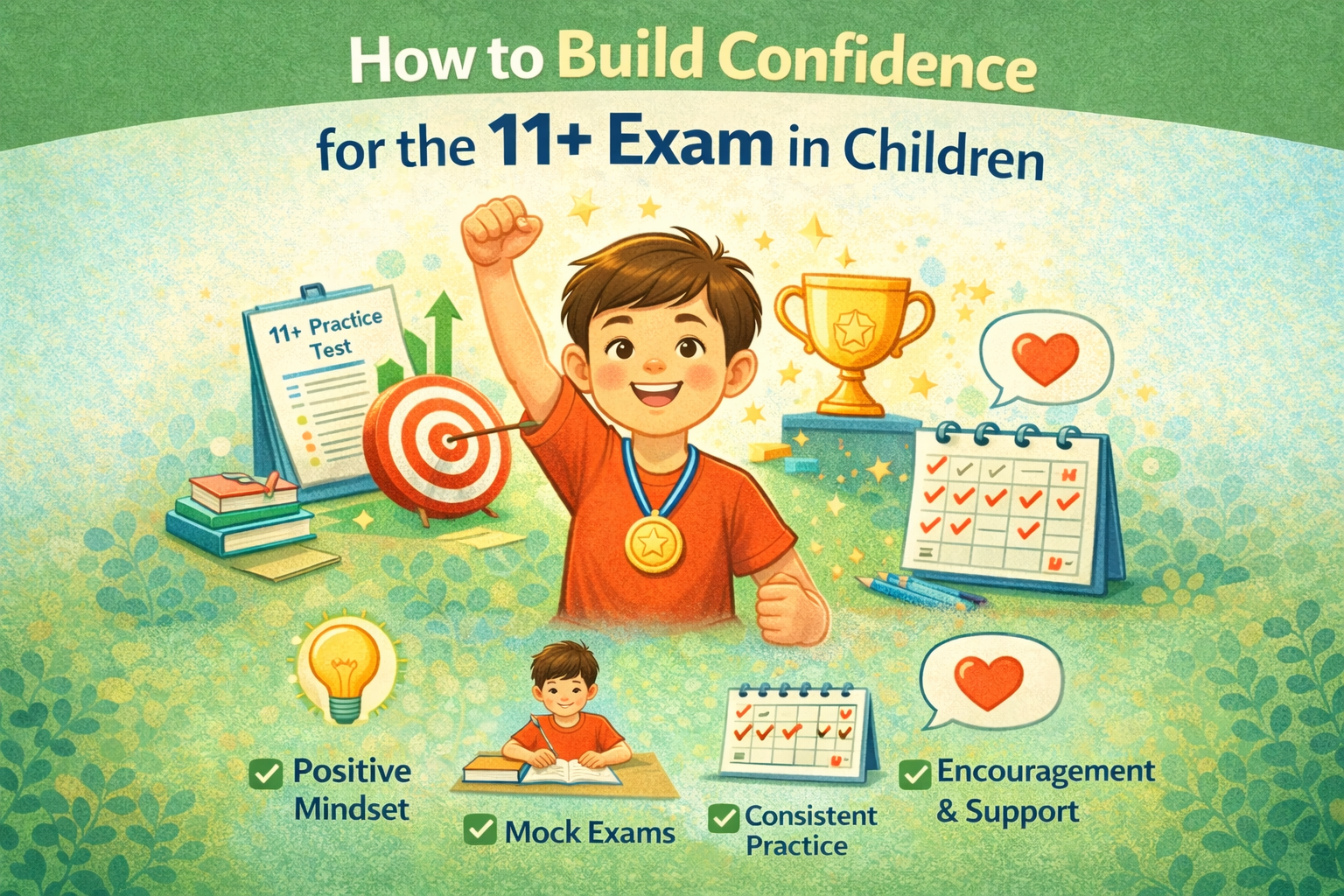
Build Confidence 11 Plus Exam for Your Child’s Success
Why It Is Important to Build Confidence 11 Plus Exam
build confidence 11 plus exam is one of the most important factors that determines a child’s performance in grammar school entrance tests. Many students have strong academic ability but fail to perform well because they lack confidence during the exam.
When parents focus on how to build confidence 11 plus exam, children feel more relaxed, motivated, and prepared. Confidence helps students stay calm under pressure and avoid panic during difficult questions.
If you actively work to build confidence 11 plus exam, your child is more likely to perform at their true potential.
Common Reasons Children Lack Confidence in the 11 Plus Exam
Before you can build confidence 11 plus exam, it is important to understand why children feel nervous:
- Fear of failure
- Lack of preparation
- Exam pressure
- Comparing with other students
- Previous poor performance
Identifying these causes helps parents take the right steps to build confidence 11 plus exam effectively.
Role of Parents in Build Confidence 11 Plus Exam
Parents play a key role in helping children build confidence for the 11-plus exam. Children rely on emotional support as much as academic preparation.
Parents should:
- Encourage positive thinking
- Avoid putting pressure
- Celebrate small achievements
- Stay supportive during setbacks
A supportive environment makes it easier to build confidence for the 11-plus exam.
How Mock Exams Help Build Confidence 11 Plus Exam
Mock exams are one of the most powerful tools to build confidence for the 11-plus exam. They expose children to real exam conditions and reduce fear.
Mock tests help:
- Familiarise students with exam format
- Improve time management
- Reduce anxiety
- Increase confidence through practice
Parents can use:
https://examplusmock.co.uk/
Regular mock exams are essential to build confidence for the 11-plus exam.
Creating a Positive Study Environment
A positive environment helps build confidence for the 11-plus exam. Parents should:
- Create a quiet study space
- Maintain a routine
- Encourage regular breaks
A comfortable environment reduces stress and helps children focus better.
Setting Realistic Goals to Build Confidence
Setting achievable goals is important to build confidence for the 11-plus exam.
Parents should:
- Break preparation into small tasks
- Set weekly targets
- Track progress
Achieving small goals helps children feel successful and build confidence for the 11-plus exam gradually.
Encouraging Regular Practice
Consistent practice is essential to build confidence for the 11-plus exam. The more children practice, the more comfortable they feel.
Parents should:
- Encourage daily study
- Include revision sessions
- Practise different question types
Regular practice helps children build confidence for the 11-plus exam over time.
Teaching Children to Handle Mistakes
Mistakes are a natural part of learning. Parents should teach children that mistakes are opportunities to improve.
To build confidence for the 11-plus exam:
- Review mistakes calmly
- Avoid criticism
- Focus on improvement
This mindset helps children stay positive and confident.
Improving Time Management Skills
Time pressure often reduces confidence. To build confidence for the 11-plus exam, children must learn how to manage time effectively.
Parents should:
- Use timed practice
- Teach prioritisation
- Encourage quick decision-making
Good time management boosts confidence during exams.
Building Strong Exam Techniques
Exam techniques are important to build confidence for the 11-plus exam. Children should learn:
- How to read questions carefully
- How to avoid careless mistakes
- When to skip difficult questions
These skills help children feel more prepared and confident.
Using the Right Study Resources
Quality resources help build confidence for the 11-plus exam. Parents should choose:
- Practice papers
- Online mock exams
- Learning platforms
For additional support:
https://www.bbc.co.uk/bitesize
Using the right materials improves preparation and helps build confidence for the 11-plus exam.
Tracking Progress to Boost Confidence
Tracking improvement is a powerful way to build confidence for the 11-plus exam. When children see progress, they feel motivated.
Parents should track:
- Mock test scores
- Accuracy levels
- Improvement in weak areas
Tracking helps children see their growth and build confidence for the 11-plus exam.
Avoiding Common Mistakes That Reduce Confidence
Parents should avoid mistakes such as the following:
- Comparing children with others
- Focusing only on scores
- Creating pressure
Avoiding these mistakes helps build confidence for the 11-plus exam effectively.
Long-Term Benefits When You Build Confidence 11 Plus Exam
When you successfully build confidence for the 11-plus exam, children develop:
- Strong self-belief
- Better problem-solving skills
- Positive learning habits
These benefits extend beyond the 11+ exam.
When Should You Start to Build Confidence 11 Plus Exam
Parents should start early to build confidence for the 11-plus exam:
- Year 4 for basic preparation
- Year 5 for focused practice
Early preparation reduces stress and improves confidence.
How to Keep Children Motivated During Preparation
Motivation plays a key role in building confidence for the 11-plus exam. Parents should:
- Encourage effort
- Reward progress
- Keep learning enjoyable
Motivated children are more confident and perform better.
Conclusion
To build confidence for the 11-plus exam, parents must focus on consistent practice, emotional support, and effective strategies. By using mock exams, setting realistic goals, and tracking progress, children can overcome fear and perform confidently. A structured approach to building confidence for the 11-plus exam not only improves performance but also helps children develop a positive mindset for future academic success.